
Meet: Charlie Lee, developer of the Litecoin cryptocurrency

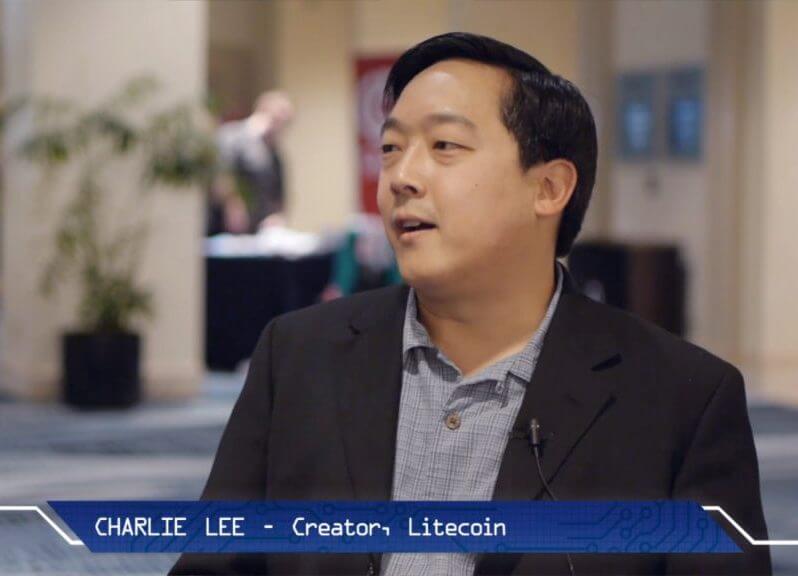
If future generations pay for their coffee with cryptocurrency, they'll have programmer Charlie Lee to thank.
Lee, born in Côte d'Ivoire, West Africa, immigrated to the United States at age 13 and now lives in San Francisco. Lee read a Wired article about the Silk Road black market back in 2011, when he was still a software engineer at Google and also trading gold. Intrigued, he contacted Bitcoin Core developer Mike Hearn and purchased Bitcoin from him. Soon, Lee began mining Bitcoin, buying the necessary computer equipment on the black market.
"Bitcoin was $30 back then," Lee told International Business Times. "I fell in love with Bitcoin, thinking it was truly good money, even better than gold." Inspired by Bitcoin, Lee began to develop the idea of creating his own blockchain-based cryptocurrency. His code almost completely replicated Bitcoin's functions and mechanisms. The biggest difference was that the tokens would operate faster than Bitcoin and be more profitable.
"I really didn't expect the token to become what it is today," he said. "Just for fun... I wanted to create a silver coin to complement the gold Bitcoin." Before fully devoting himself to his brainchild, Litecoin, Lee left Google and began working at the world's most popular Bitcoin exchange, Coinbase.
“Silver is cheaper and lighter, my calculation was that people would use silver more as a currency because gold is not used for daily expenses,” Lee said. “Over the years, you’ve seen Bitcoin transactions become more expensive, while Litecoin transactions are still relatively cheap.”
Because Bitcoin operates on a decentralized network whose participants are scattered around the world, transactions are slow; users pay a portion of their tokens for the network's computing power. The price rises as demand increases, just like Ethereum's gas. Litecoin transactions cost pennies compared to these giants.
Today, many people use Litecoin for trading and currency exchange. Many users still can't use it to pay for services or conduct business transactions, such as with Ripple's XRP. However, some websites, such as Yours.org, are switching from Bitcoin to Litecoin payments because it's easier. "If you have a Bitcoin-integrated website, one or two code changes will allow you to enable Litecoin on it," Lee said. Overstock.com recently began accepting Litecoin, and other retailers are typically following suit.
There are reportedly 50 cryptocurrency ATMs around the world that use Litecoin, which peaked at $56 in July. “Bitcoin, as the most secure and decentralized currency, will handle high-value transactions,” he said. “Litecoin will be used for everyday transactions, like buying groceries and coffee.”
Lee has hired two full-time employees, meaning all of Litecoin’s operations are run by three people, including Lee himself. “We’re not localized in a particular location, but we work remotely. We communicate online. You could say the developers are spread out all over the world,” Lee said. “The purpose of the [Litecoin] foundation is so that we can raise money to hire more developers.”
Despite limited resources, the Litecoin team has already achieved incredible feats. Litecoin is currently among the top ten cryptocurrencies with a market capitalization of over $2 billion. The technology behind it is modern and flexible, thanks to the SegWit and Lightning scaling solutions.
Bitcoin is like a highway, with developers debating how to add more lanes to reduce congestion. Meanwhile, nimble little Litecoin is figuratively ready to add new roads and ramps, allowing people to get on or off highways whenever they need to.
“With the Lightning Network, you can easily convert Bitcoin to Litecoin and vice versa. So you can keep most of your money in Bitcoin, and if you need to pay for something, you can easily convert it to Litecoin,” Lee said. “Bitcoin fees will remain high. If you need to pay five dollars, the fee will also be five dollars, it’s just not practical.”
Lee isn’t trying to dethrone bitcoin. He believes that bitcoin is better suited for high-value transactions. “As for a decentralized network, it’s inherently inefficient. Every node in the network has to process every transaction and store a copy of it,” he said. “We need to separate the workload across different currencies.”
None of this would be possible without the work of people like Elizabeth Stark, CEO of Lightning Labs. It is working to implement its blockchain solution for multiple currencies, including Bitcoin and Litecoin. Rebuilding such infrastructure is inherently difficult. While Lee jokes in Twitter on the topic of how the Bitcoin community discusses updates, Stark is already working with blockchain companies such as Bitfury, testing network capabilities.
While it's still difficult to say when testing and implementation of any Lightning Network currency will be complete, the groundwork has already been laid for Litecoin. "Litecoin has SegWit enabled," Stark told IBT. "This will work on Litecoin until we feel the software is ready for users using real currency. That moment is just around the corner."
What would happen if, in order to send an email, you first had to download every email you've ever sent? It's forever, isn't it? Stark and Lee want blockchain networks to retain the security features of Bitcoin without the extra burden.
Lightning is like a layer on top that changes the way blockchain networks operate while also making it easier to develop on them. “It allows for instant clearing,” Stark added. “So you can instantly withdraw your deposit, or send it to your friend, or build an app.”
Stark also told IBT that Litecoin is more amenable to technological innovation than many other virtual tokens. “It does a lot of the things that users would want with Bitcoin, but it requires some kind of consensus to get into the community,” Stark said. “Litecoin can be iterative, and you can add new technologies to it without changing the direction it’s going.”
One of the most compelling features offered by the Lightning Network is the ability to transfer value between entire blockchain networks without the need for an exchange or a central trusted party. Imagine being able to exchange a dollar at the cashier for a coffee in Italy. As you move your hand, the bill magically changes and turns into euros. It's not a perfect example, but it illustrates what cross-chain interoperability can do. "This is a new technology we haven't seen before," says Stark. Lee plans to add more privacy to Litecoin in the future.
Many experts believe that cryptocurrency will expand its influence until it becomes one of the most widespread and convenient for daily transactions globally. If this dream comes true within the next decade, Litecoin will have a new purpose.