

In 2026, the US Oil (USOR) cryptocurrency captured the public's attention, so the editorial team Happy Coin News I decided to find out whether these tokens are a scam or a profitable investment.
What is USOR?
US Oil is a digital asset released on the Solana (SOL) blockchain on January 8, 2026. The circulating supply of coins is just under 1 billion, their price fluctuates around $0,018, and the market capitalization exceeds $18 million.

USOR Statistics
Other information about the cryptocurrency is rather contradictory. The project's website states that the issuer holds $803,020 worth of wrapped Bitcoin, Ethereum, XRP (XRP), Cardano (ADA), and SOL. However, US Oil doesn't have a stable exchange rate and isn't positioned as a stablecoin, so why the token creators need cryptocurrency reserves remains a mystery.

Digital assets allegedly owned by USOR issuers
According to the developers of US Oil, the coin opens access to investments in US oil reserves via the blockchain in a secure and transparent manner. However, the tokenization of the energy resource is not scheduled to take place until February 1, and its intended results are still unclear. Therefore, for now, USOR is just one of many cryptocurrencies lacking any objective value or utility.
Why were there concerns about the reliability of USOR?
The allegations that US Oil is a scam arose for the following main reasons:
- Information about the startup's employees is not disclosed;
- There is no full-fledged White Paper;
- The creators of the cryptocurrency hint at their connections to US President Donald Trump, the US government and the major investment company BlackRock;
- The digital asset's price is characterized by high volatility.
The USOR website provides no information about the company behind the token's development, who exactly will be tokenizing the oil, or how to contact the startup's representatives. Furthermore, without the White Paper, it's impossible to obtain detailed information about the cryptocurrency's features and how it will function.
The developers of US Oil plan to tokenize oil reserves controlled by the United States, which will be officially verified. To do this, the project's employees will need to cooperate with federal authorities, but nothing is known about this. Rumors that Trump's team owns the lion's share of USOR coins are not supported by blockchain data.
According to the Solscan block explorer, there are no individuals or organizations associated with the president among the major token holders, which, incidentally, are well distributed, with the top 10 investors owning only 16,15% of the digital assets.

10 Crypto Wallet Addresses Holding the Largest Amount of USOR
BlackRock specialists, who are supposedly assisting with oil tokenization, also do not own US Oil, according to an analysis by Arkham employees. Company representatives have not publicly commented on the USOR release and have not associated themselves with the project in any way. It's likely that the creators of US Oil are deliberately mentioning the government, BlackRock, and Trump to enhance their credibility with potential investors.
The icing on the cake for USOR was the coin's high price fluctuations. For example, from January 19th to 21st, the token's price increased almost sevenfold, but the bullish rally quickly ended, and the cryptocurrency's price plummeted by 83% in a matter of hours, effectively returning to levels seen before the uptrend began. This dynamic resembles a pump-and-dump scam.

US Oil Price Fluctuations
What is driving investor interest in USOR?
Demand for US Oil is fueled by the demand for tokenized assets, such as shares of large companies and precious metals. As a household name, oil traditionally attracts investor interest, so the USOR cryptocurrency hasn't escaped their attention.
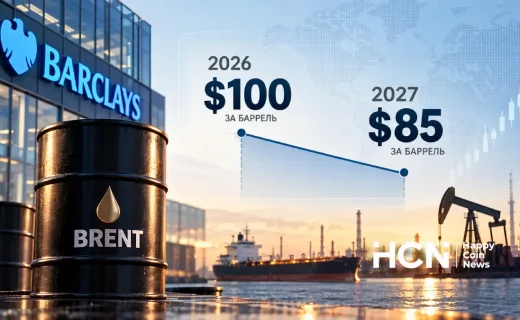
However, 2026 is, to put it mildly, not the best year for energy investments. Due to global economic stagnation or decline, the shift to electric vehicles and greener energy generation, oil prices are not expected to rise. Amid protests in Iran and the capture of Venezuelan leader Nicolás Maduro by the Americans, the price of "black gold" has risen only 5% over the past month and has remained within the bearish trend that began in March 2022.

A downward trend in the oil price chart
Is USOR worth buying?
Given the low probability of oil price increases in 2026, it's clear that investing in USOR is pointless. Even if the startup's employees implement their plan to tokenize the energy resource, the digital asset's value won't benefit, and if oil prices fall, it will even suffer. If the team members turn out to be scammers, USOR's fate is certainly not to be envied.
Taking this into account, the analyst Happy Coin News Yuri Saveliev doesn't see a scenario where US Oil generates profits for its investors in the foreseeable future. Therefore, our editorial team advises holding off on cryptocurrency purchases until at least February 1, when the tokenization of US oil reserves is scheduled to occur. This will prevent significant losses caused by a collapse in the coin's value following the project's failure.
What does the history of oil cryptocurrency tell us?
To guess what fate awaits USOR, consider the Venezuelan virtual currency, the Petro, issued in 2018. The government and former President Nicolás Maduro intended the exchange rate of these digital assets to be stable thanks to the state's $60 billion in oil reserves. The Petro was recognized as legal tender, comparable to the depreciated bolivar, and began to be promoted through government channels. It was used, for example, to pay pensions and bonuses to the military.

Nicholas Maduro
However, the public reacted coolly to the Petro and did not share the government's excitement about its creation. This dislike of the cryptocurrency was primarily due to the complex process of identifying coin owners and the glitches in the token-based payment system. Due to the lack of demand for the Petro and the corruption scandals associated with the cryptocurrency, the government opted to shut down the project without fanfare in early 2024.
The Petro example showed that Venezuelans preferred decentralized cryptocurrencies, particularly Bitcoin and Ethereum, as well as coins based on liquid currencies, such as the dollar-pegged stablecoin Tether (USDT), over centralized oil-based digital assets. Since then, the situation hasn't changed dramatically, with BTC, ETH, and USDT enjoying the greatest popularity.
The information on this site is for informational and educational purposes only and does not constitute investment advice or financial recommendations. Cryptocurrencies and digital assets carry a high level of risk, including possible loss of capital. The editors are not responsible for decisions made based on the published materials. It is recommended to conduct your own research (DYOR) before making investment decisions. Read the editorial policy at https://happycoin.news/about/

Nicholas
What specific indicators in the USOR description suggest that it may be a scam?