

- Sales of foreign securities by Japanese authorities generate US dollars, which are used to buy yen.
- The Japanese government's actions are putting pressure on US government debt and negatively impacting risky assets, including Bitcoin.
Further currency interventions may require additional sales of foreign securities, including U.S. Treasuries.
From July 30 to August 26, Japan spent 15,4 trillion yen, or nearly $100 billion, after the yen weakened to 164 yen per dollar. This intervention helped return the currency to 155 yen, but also coincided with the largest monthly decline in Japan's foreign exchange reserves on record.
Japan's reserves fell by $79,6 billion in August, and another round of currency weakening will increase pressure on US government debt.
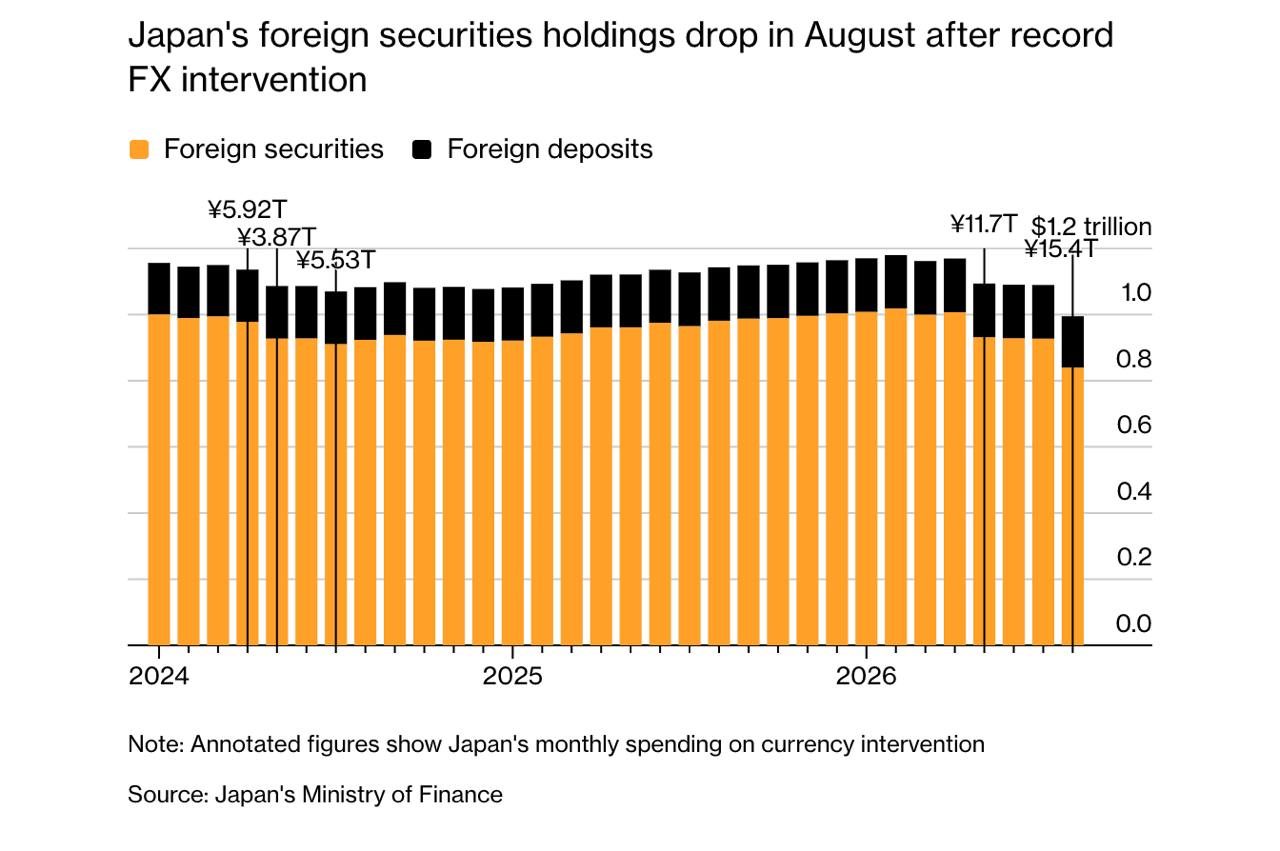
Japan remains the largest foreign holder of US government debt, with over $1 trillion invested in Treasury bonds. Foreign securities also constitute the largest share of Japan's reserve assets, making them a key funding mechanism for bond traders.
When Japanese authorities buy yen on the foreign exchange market, they need dollars. Selling foreign securities provides the necessary liquidity, meaning another major intervention could coincide with a further reduction in the volume of Japanese foreign bonds.
Meanwhile, US bond yields are truly high: the 10-year Treasury yield is 4,8%, and the 30-year yield recently reached around 5,3%. This brings long-term borrowing costs close to levels last seen in 2007, making markets sensitive to any additional selling from Japan.
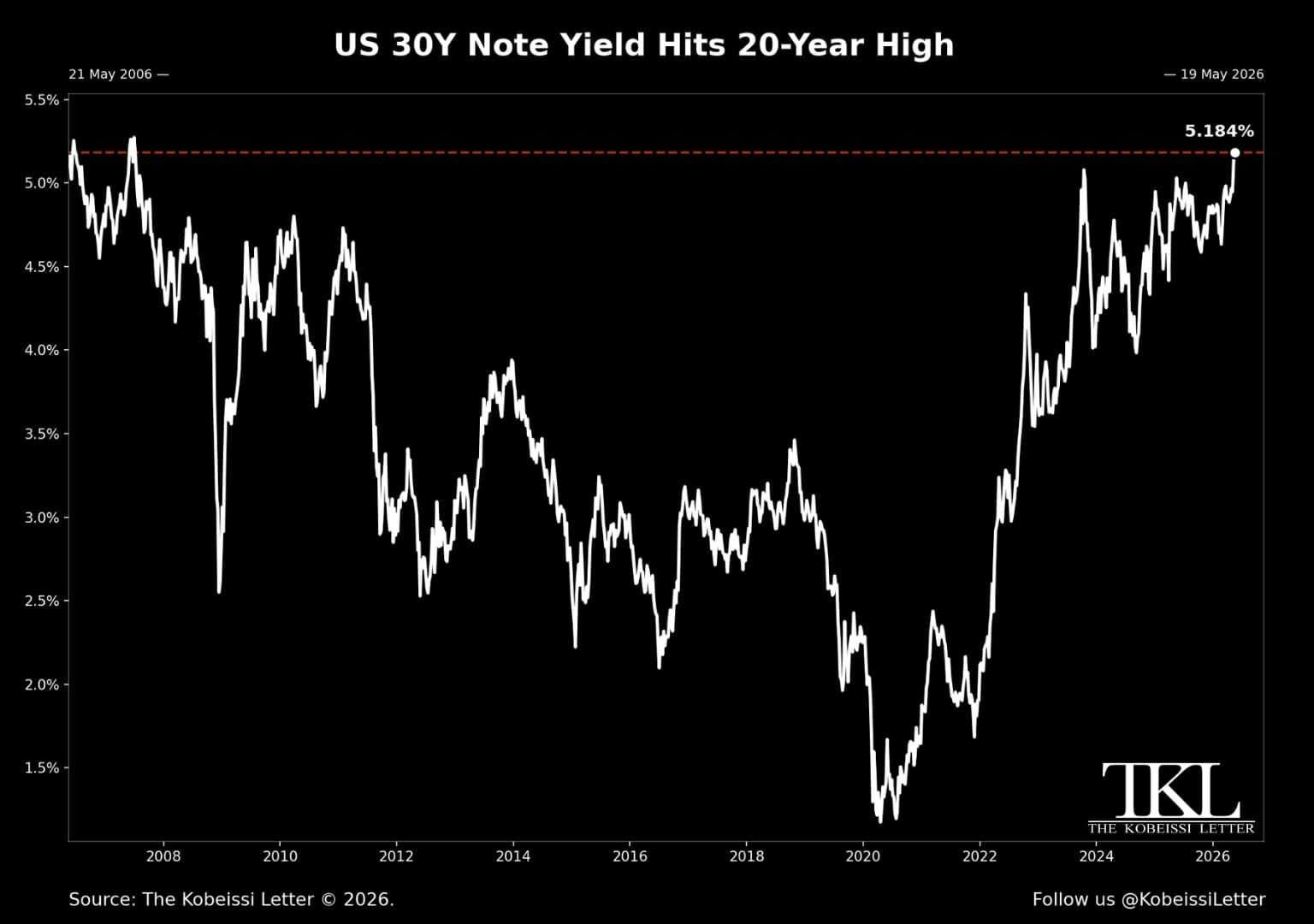
Source: The Kobeissi Letter
Thus, Japan's intervention combines two markets that traders are watching: USD/JPY and US Treasury bonds. If the USD/JPY pair returns to the 160-165 range, expectations for further Japanese intervention could increase. Additional selling of foreign securities will put pressure on Treasury bond prices and push up their yields.
Rising Treasury yields will tighten financial conditions in the US by raising borrowing costs, which will negatively impact risky assets. Stocks, especially tech stocks, could face pressure, and Bitcoin will not escape this fate.
The information on this site is for informational and educational purposes only and does not constitute investment advice or financial recommendations. Cryptocurrencies and digital assets carry a high level of risk, including possible loss of capital. The editors are not responsible for decisions made based on the published materials. It is recommended to conduct your own research (DYOR) before making investment decisions. Read the editorial policy at https://happycoin.news/about/