

In connection with the development of the cryptocurrency industry and the emergence of new platforms, the editorial board Happy Coin News I prepared a guide on which DeFi Farm income in 2026.
How did we determine the best platforms for earning cryptocurrency?
When compiling a list of preferred decentralized services, we took into account the following key indicators:
- Reliability;
- Demand;
- Market share;
- The amount of potential profit from using the services.
Statistics show that DeFi is more susceptible to hacker attacks than other cryptocurrency platforms, so we selected only well-known platforms with sufficient resources to maintain a high level of security and compensate for losses in the event of digital asset theft. Therefore, we prioritized reliability over product profitability, as a bird in the hand is worth two in the bush.
Where to stake digital assets?
Among the cryptocurrencies issued in blockchains based on the PoS algorithm, the most stable is considered to be эфириум, who is often called the king DeFi for leadership in the value of digital assets locked in decentralized services. That's why the analyst Happy Coin News Yuri Saveliev recommends staking ETH, despite the fact that it brings less income than locking, for example, Solana (SUN).
Among Ethereum staking platforms, Lido Finance ranks first in terms of total assets . This fact demonstrates that network users vote for this startup with their rubles and trust its employees. Lido Finance trails many competitors in staking yield, at 2,38%, so the reason for the company's popularity lies elsewhere.
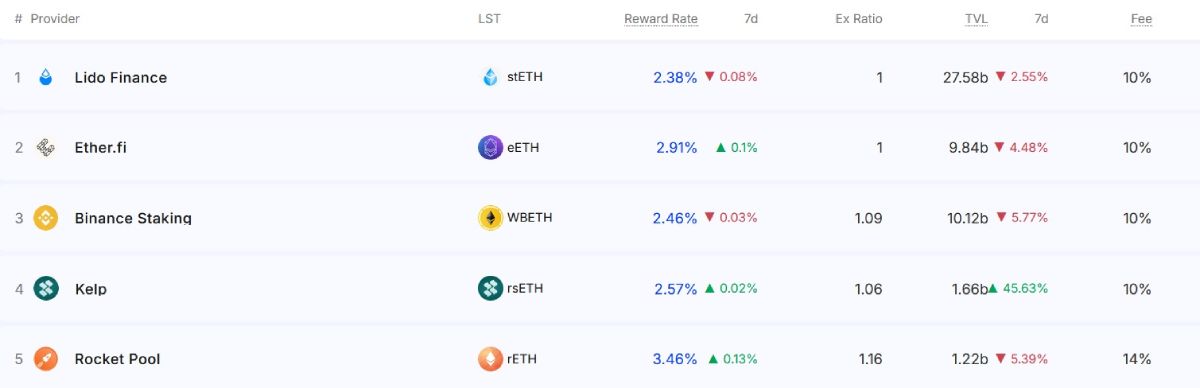
The most popular ETH staking providers
Lido Finance attracts the attention of Ethereum holders because:
- The platform's software has not been hacked since 2020;
- The platform is characterized by high liquidity;
- The service is integrated into more than 100 crypto wallets and other products;
- Collaborating with DeFi Node operators are distributed across different parts of the world.
A significant factor behind Lido Finance's popularity is the fact that the platform issues staked Ethereum (stETH) in exchange for locked coins . These can be sold at any time, while locked ETH can take 20 days or more to unlock if there's a long backlog. Therefore, stETH holders have the opportunity to sell their tokens immediately after a bearish trend, thereby protecting themselves from losses caused by a decline in the cryptocurrency's price.
Which lending platform should you use?
Among DeFi platforms that allow you to earn money by issuing cryptocurrency loans, Aave, which supports 18 digital asset networks, is the undisputed leader. This platform tops the ranking of decentralized services on the Ethereum blockchain by the amount of funds locked, reaching $28,6 billion.
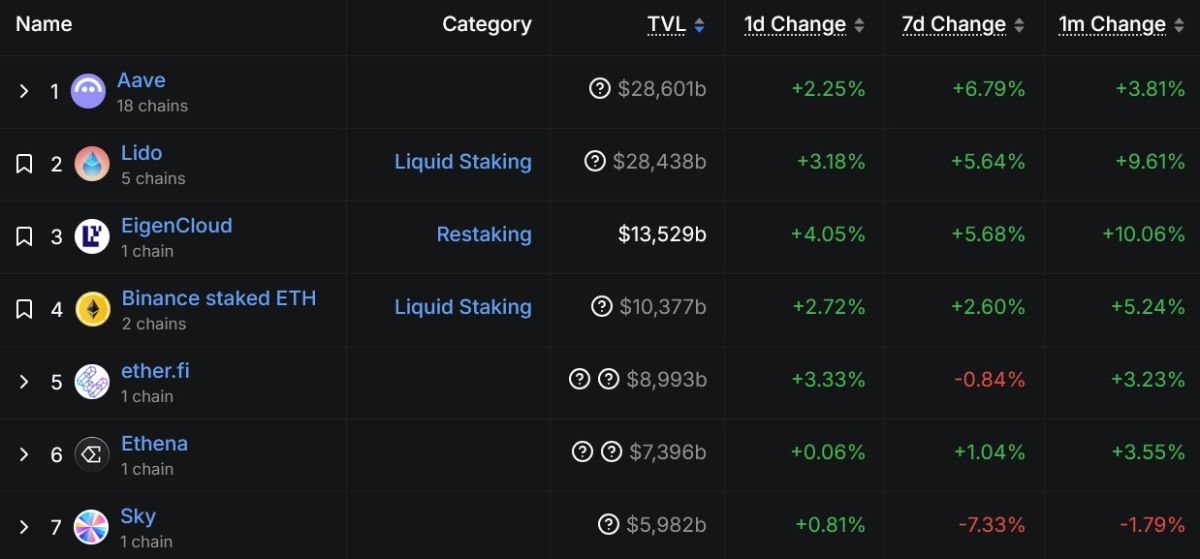
Aave among the most popular DeFi currencies
Aave offers loans for dozens of different virtual currencies, including Ethereum, Tether (USDT), wrapped Bitcoin, and Tether Gold (XAUt). The yield on locked dollar-denominated stablecoins in this DeFi platform reaches 6.5%, while deposits in euro-based Euro Coin (EURC) pay 3,07% per annum.
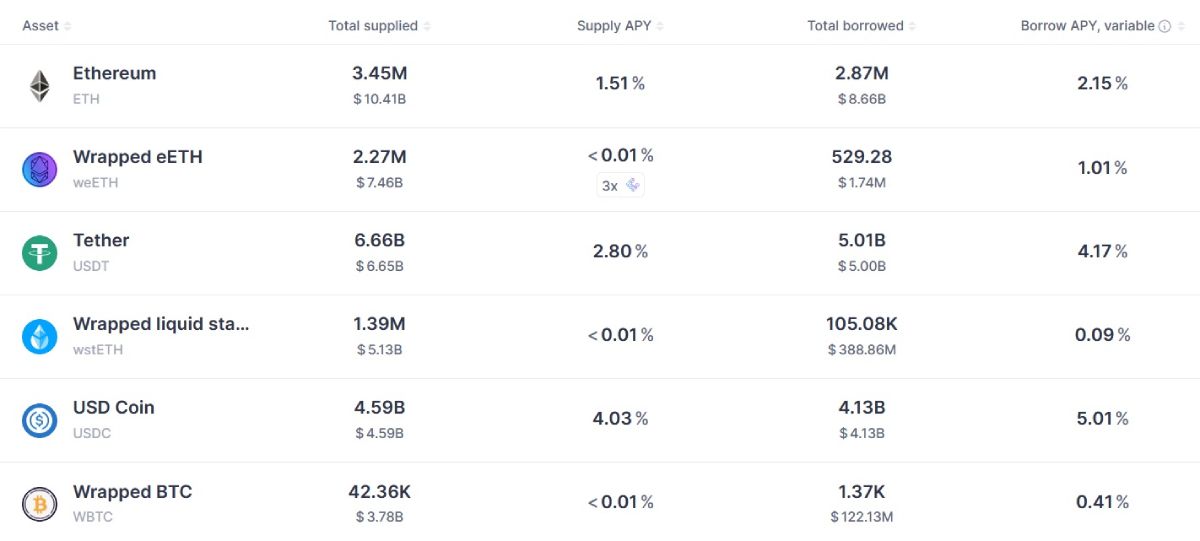
Terms and conditions for borrowing and issuing loans in certain digital assets on Aave
To protect users from cyberattacks, the company regularly checks its software and runs bug bounty campaigns, with participants receiving rewards for discovering errors. To be fair, these measures haven't protected the platform from hacks. For example, in June 2025, an attacker exploited a vulnerability in the startup's smart contract and issued Aave Tokens ( AAVE) without replenishing the balance. However, the damage from this scam amounted to only $15,000, and the platform's users suffered no losses.
Where is the best place to profit from stablecoins?
Among the reliable and well-known platforms that allow you to earn high returns on cryptocurrencies with stable exchange rates, Uniswap is worth mentioning . Liquidity pools opened on the platform pay 14% per annum, or even more for locking dollar-denominated stablecoins. For example, the return on deposits in USDC (USDC) and Tether (USDC) reaches 14,98%.
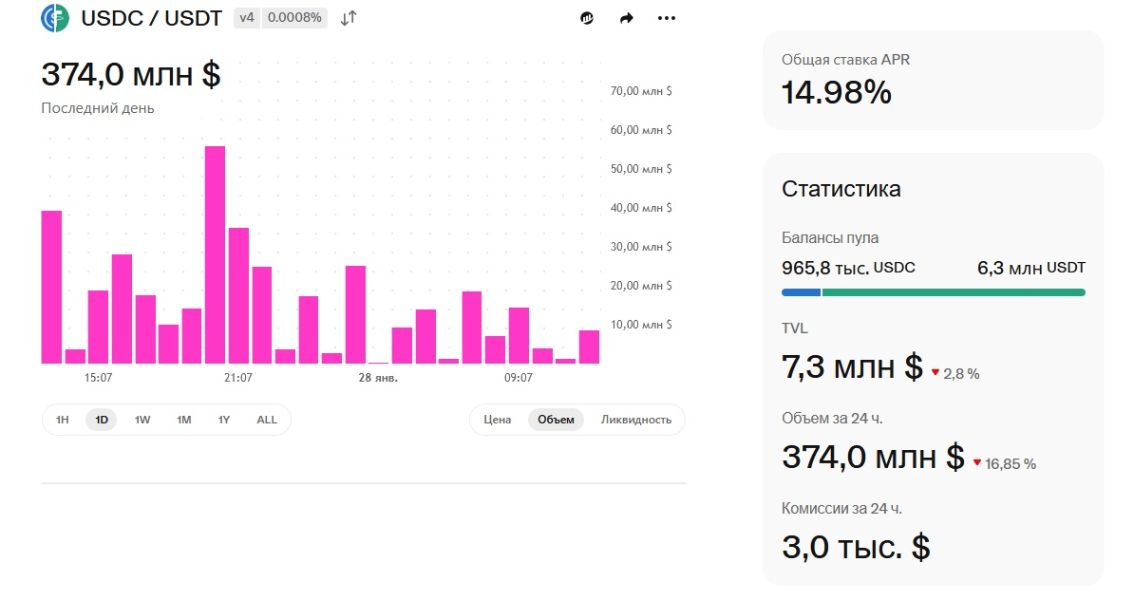
USDC/USDT pool statistics on Uniswap
Pools that include more than just stablecoins, and thus carry high risks, offer even more impressive returns. Specifically, a pool that requires deposits in wrapped Bitcoin and USDC pays 23,05% per annum. Furthermore, if the WBTC price rises, the profitability of this investment will increase, but if the coin's price falls, it will decrease.
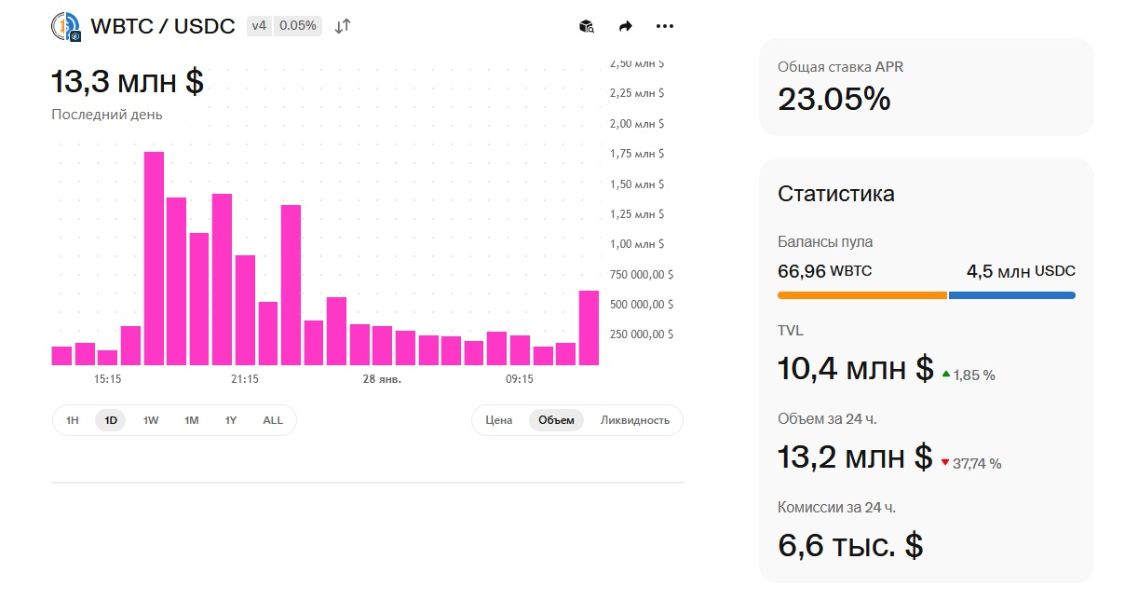
WBTC/USDC Pool Performance on Uniswap
The high yield of stablecoin lockups on Uniswap stems from the risks faced by liquidity providers. Because the protocol is completely decentralized, the platform's clients are vulnerable to errors or fraudulent transactions by pool creators. To mitigate this risk, it makes sense to prioritize pools with a large number of locked assets and a high transaction volume.
Where can I earn money with Solana?
Solend, a specialized DeFi lending service supporting 136 digital assets, has been launched for Solana (SOL) blockchain users . This decentralized service's pools allow you to lock up Donald Trump's OFFICIAL TRUMP (TRUMP) memcoin, Zeus Network coins (zBTC) pegged to Bitcoin, Jupiter (JUP) digital assets created by the exchange of the same name, and many other virtual currencies issued on the SOL network.
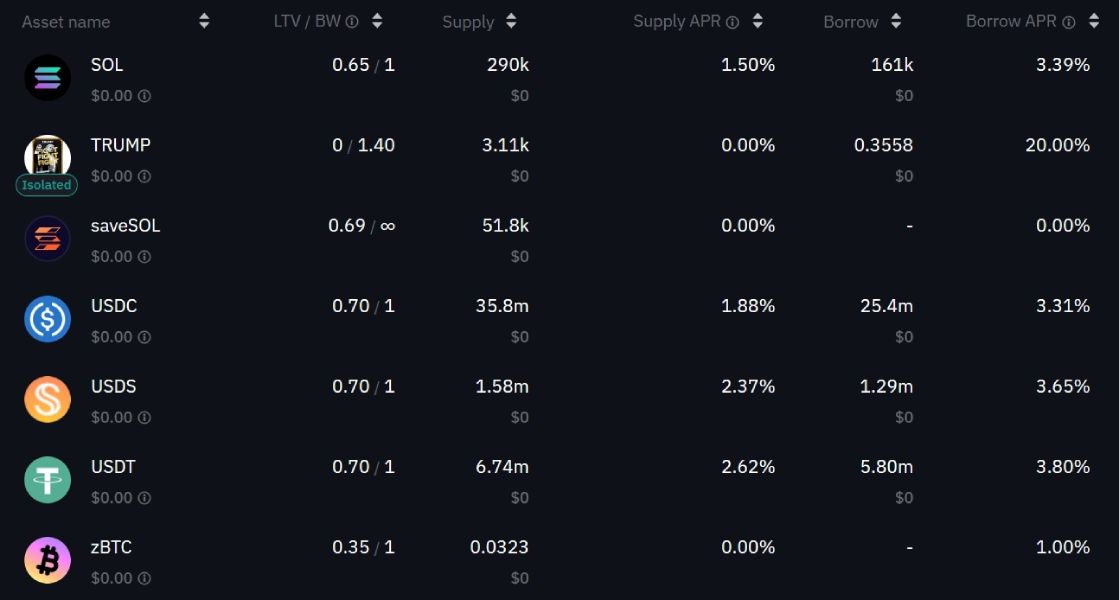
Some cryptocurrencies that can be borrowed and lent in Solend's main pool
However, it's worth noting that Solend doesn't boast high returns on digital asset staking. For example, Solana staking yields an average of 6,12% per annum, while Solend only pays 1,5% for SOL deposits. Returns on dollar-denominated stablecoins don't exceed 2,62%, and Ethereum deposits pay even less—0,29%.
The low APY observed on Solend in January 2025 can be explained by the lull in the crypto market. Due to falling trading volumes, demand for lending products has declined, so pools are overly liquid and unable to offer users higher returns. This situation is evident from the fact that DeFi clients borrowed only $151 million worth of crypto out of $266 million in balances.
A clear advantage of Solend is that it has only been hacked once since its launch in 2021. In November 2022, an attacker was able to manipulate the price of digital assets represented in pools and withdraw $1,26 million worth of coins. Since then, the protocol has not been successfully hacked, apparently thanks to bounty campaigns to find bugs in the software.
This article does not constitute investment advice. The reader bears full responsibility for any actions taken based on the information obtained on our site. The acquisition of high-risk assets is associated with additional risks.
The information on this site is for informational and educational purposes only and does not constitute investment advice or financial recommendations. Cryptocurrencies and digital assets carry a high level of risk, including possible loss of capital. The editors are not responsible for decisions made based on the published materials. It is recommended to conduct your own research (DYOR) before making investment decisions. Read the editorial policy at https://happycoin.news/about/