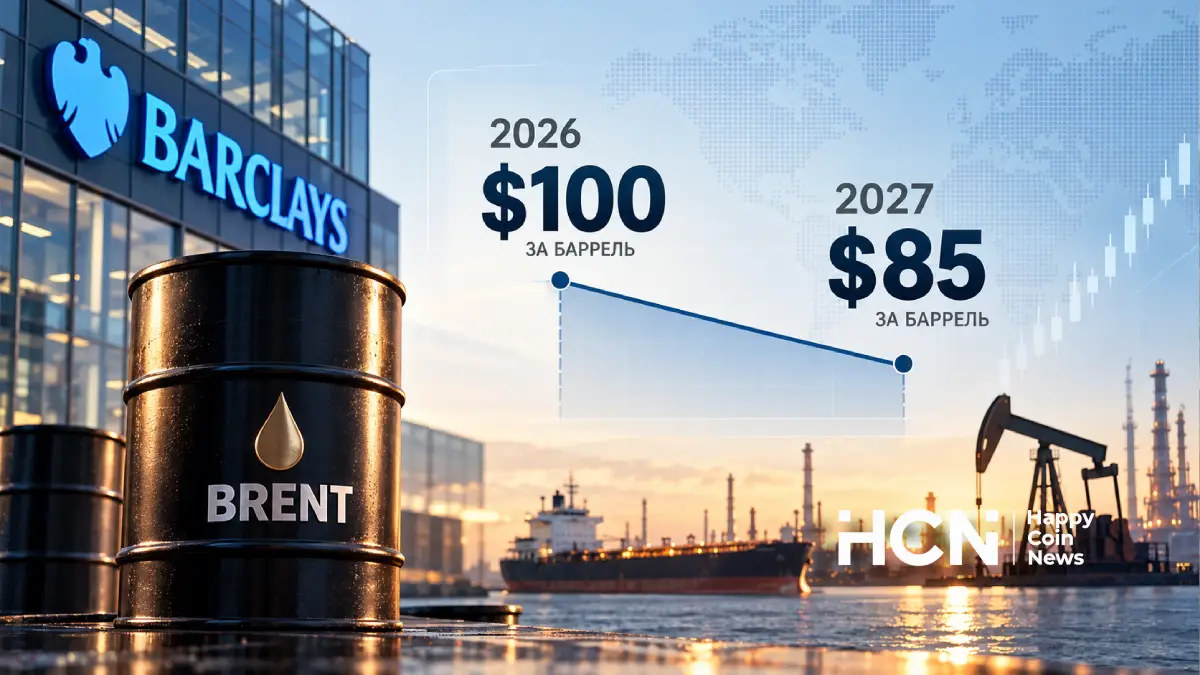
- Specialists British bank Barclays confirmed its forecast for an average Brent price of $100 per barrel in 2026.
- This position is explained by the depletion of global oil reserves.
Analysts at the British bank Barclays maintained their forecast for the average price of Brent at $100 per barrel in 2026, and they expect a decline to $85 in 2027. The bank's assessment isn't meant to suggest oil prices will rise to $100, as Brent was already trading around $106 on October 16. Barclays assumes the current price shock will be long-lasting and won't disappear with the latest easing of geopolitical tensions.
This is a significant shift for the oil market. Just a few months ago, the main question was how quickly supplies through the Middle East would resume. Now, forecasts are increasingly focused on a different issue: how long it will take to replenish depleted reserves, normalize shipping, and return sufficient oil to the market.
Barclays returns to $100 after summer optimism
The bank's forecast evolved throughout the year, reflecting the situation around the Strait of Hormuz. In May, Barclays raised its estimate for the average price of Brent crude in 2026 from $85 to $100, citing prolonged supply disruptions. At the time, analysts warned that the oil market was facing a major shortage and a rapid decline in inventories.
At the end of June, the picture looked somewhat calmer. Amid the recovery of some flows through the Strait of Hormuz, the bank lowered its forecast for 2026 to $96, and for 2027, from $88 to $85.
By October, the next year's estimate had risen back to $100, while the 2027 forecast remained at $85. This discrepancy clearly illustrates Barclays' logic: the bank believes the problem is serious enough to keep oil expensive into 2026, but it doesn't necessarily translate into a permanent new price level.
This view is consistent with Barclays' own broader assessment . In its October Private Bank review, the bank cited elevated energy prices as one of the factors further increasing inflation risks and pressure on interest rates.
Stocks have become more important than daily news
One of the main arguments in favor of a prolonged period of high prices is the state of oil reserves.
The International Energy Agency reported that observed global oil inventories fell by 509 million barrels in September compared to the end of February. Aboveground inventories fell by another 113 million barrels in September.
This is where a short-term geopolitical shock begins to transform into a more long-term market problem. Even if export routes are gradually restored, missing reserves cannot be replenished in a matter of days. Not only must oil return to the market in previous volumes, but supply must also exceed consumption for a period of time to replenish reserves.
Meanwhile, shipping remains expensive and vulnerable. The US Energy Information Administration notes record tanker rates, rising insurance costs, and the use of longer routes to avoid conflict zones. All of these costs increase the final cost of crude oil supplied to refiners.
The information on this site is for informational and educational purposes only and does not constitute investment advice or financial recommendations. Cryptocurrencies and digital assets carry a high level of risk, including possible loss of capital. The editors are not responsible for decisions made based on the published materials. It is recommended to conduct your own research (DYOR) before making investment decisions. Read the editorial policy at https://happycoin.news/about/